This guide covers everything you need to know about retail technology. From what it is and future trends to strategy, planning, and implementation.
Contents
- What is retail technology?
- Future retail technologies
- Retail technology strategy
- How can retailers implement new technology?
- How can brands implement technology into product displays?
- Get started with a retail technology project
What Is Retail Technology?
Technology in Retail Stores: The Top 10 Most Used Tech
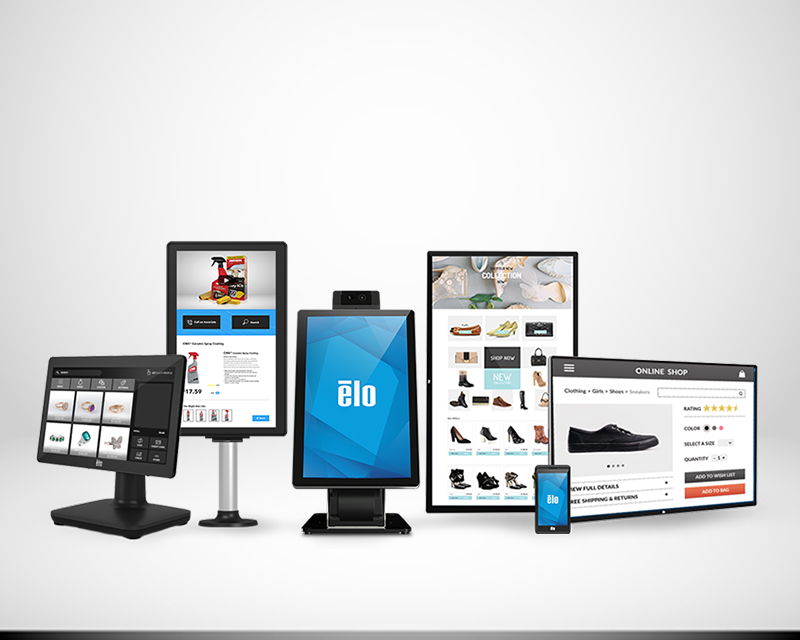
Technology in retail stores and technology trends in the retail industry are changing the way we do business, no matter your sector. App payments, facial recognition, click and collect, and interactive displays provide just some of the many opportunities there are for retailers to use technology to enhance their offering. The result? Technology in retail stores can provide an enhanced consumer experience and boost your bottom line. Go in-depth: Read Technology in Retail Stores: Top 10 Most Used Tech right now. Looking to the future? Dive into all the new and up-and-coming retail tech trends.1. Digital signage
2. Buy online, pick up in-store
A halfway point between e-commerce and in-store experience, ‘buy online, pick up in store’ is increasing exponentially. It has clear benefits in getting customers into your store and encouraging impulse buys...but it’s only a good shopper experience when it’s well-executed. The process must be seamless and brand-coherent, from online ordering to being in-store.3. Automated checkout
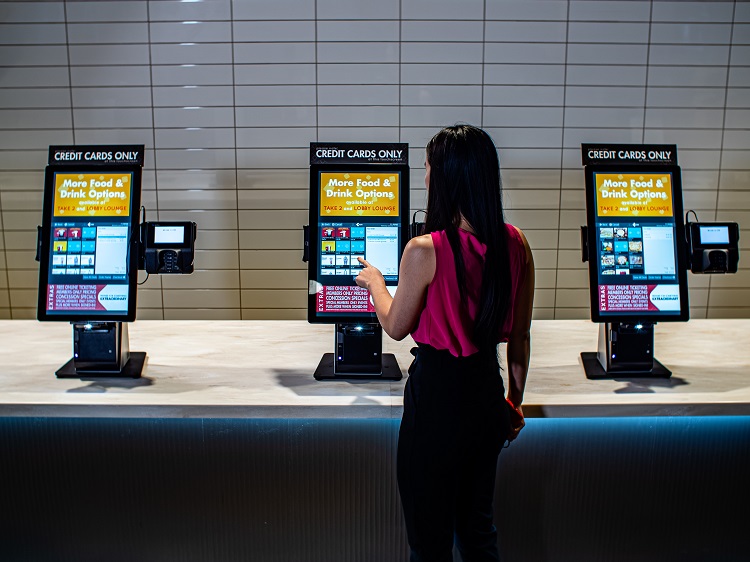
There’s a very definite increase in demand for automated checkout in retail. The absence of human interaction is much more accepted these days - and it’s also a quicker way to shop. According to Forbes, 85% of customers said they think automated checkout is faster, and almost half already use automated checkout whenever they shop.
4. Interactive retail displays
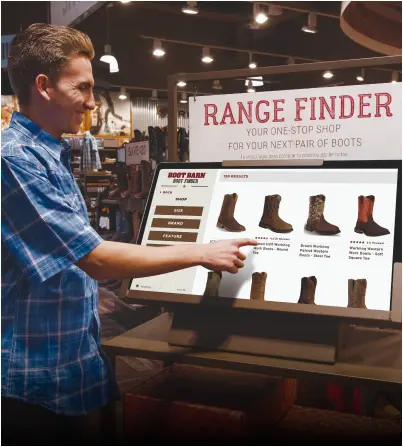
Interactive retail displays put you in instant control. They allow you to create compelling experiences for customers in real-time while collecting valuable customer data, such as footfall and engagement with advertising. Interactive displays are educational yet non-invasive, simple to use, and ensure you’re always connected. Get connected. Explore interactive retail displays.5. Interactive kiosk
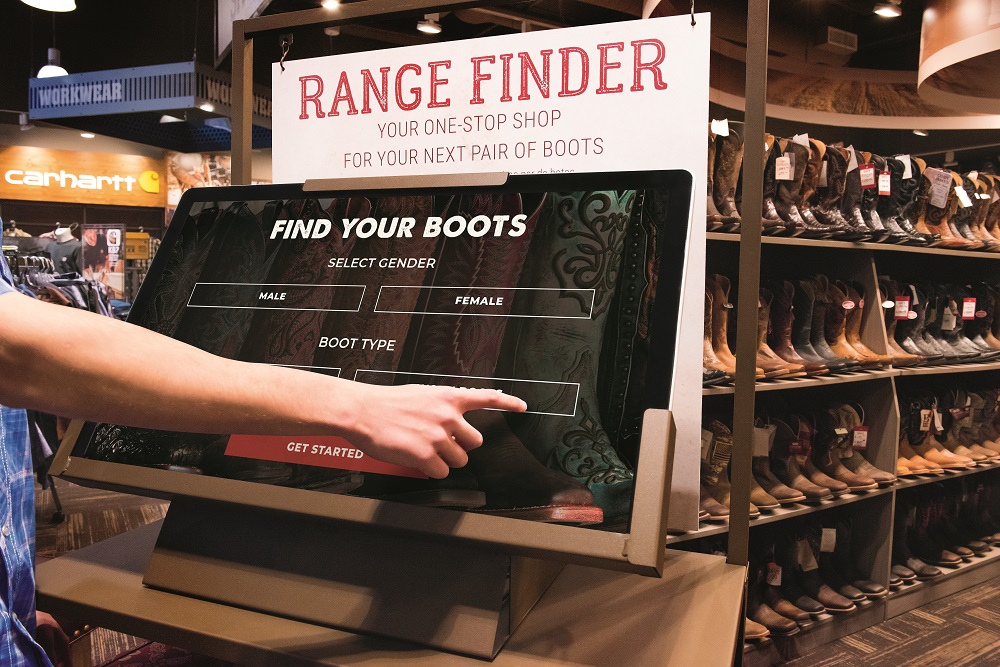
An interactive kiosk bridges the gap between your online presence and the in-store experience. Customers can use interactive retail kiosks for anything from finding product information and purchasing to navigating their way around your store and searching your full range. And it’s not just about an enhanced consumer experience; interactive kiosks can also reduce staff costs, collect customer data, and help increase sales. Find out more about interactive kiosks.6. Endless aisle solution
7. Real-time inventory management
Having accurate stock data at your fingertips can help keep you one step ahead. Real-time inventory management effectively manages both stock-flow and forecasting. This ensures you have products in-store when you need them. Which helps stores to cut waste, and allows customers to track stock in real-time, helping them make quicker buying decisions.8. On-the-spot payments
On-the-spot payments are gathering momentum. They make shopping faster, are convenient for customers, and are a great solution for busy periods. The numbers are revealing: there were 209 million contactless payments in April 2020, and 519 million in June 2020.9. Cashierless store
Robotics is changing the face of retail, and being an early adopter can set you apart. Amazon kick-started the cashierless store in 2018, and since then, retailers like Tesco and Walmart have started using this technology in supermarkets. Why? Because it’s convenient, quick, and a smoother shopping experience for your customers. There’s less waiting, and that means less frustration.10. Facial recognition
Facial recognition in retail stores means you can track demographics and understand in detail how customers interact with your store. You can also use this technology in retail to increase consumer satisfaction. Staff will be able to recognise customers, build a rapport, and provide a more personalised shopping experience. On a more practical level, it also helps prevent theft.Future Retail Technologies
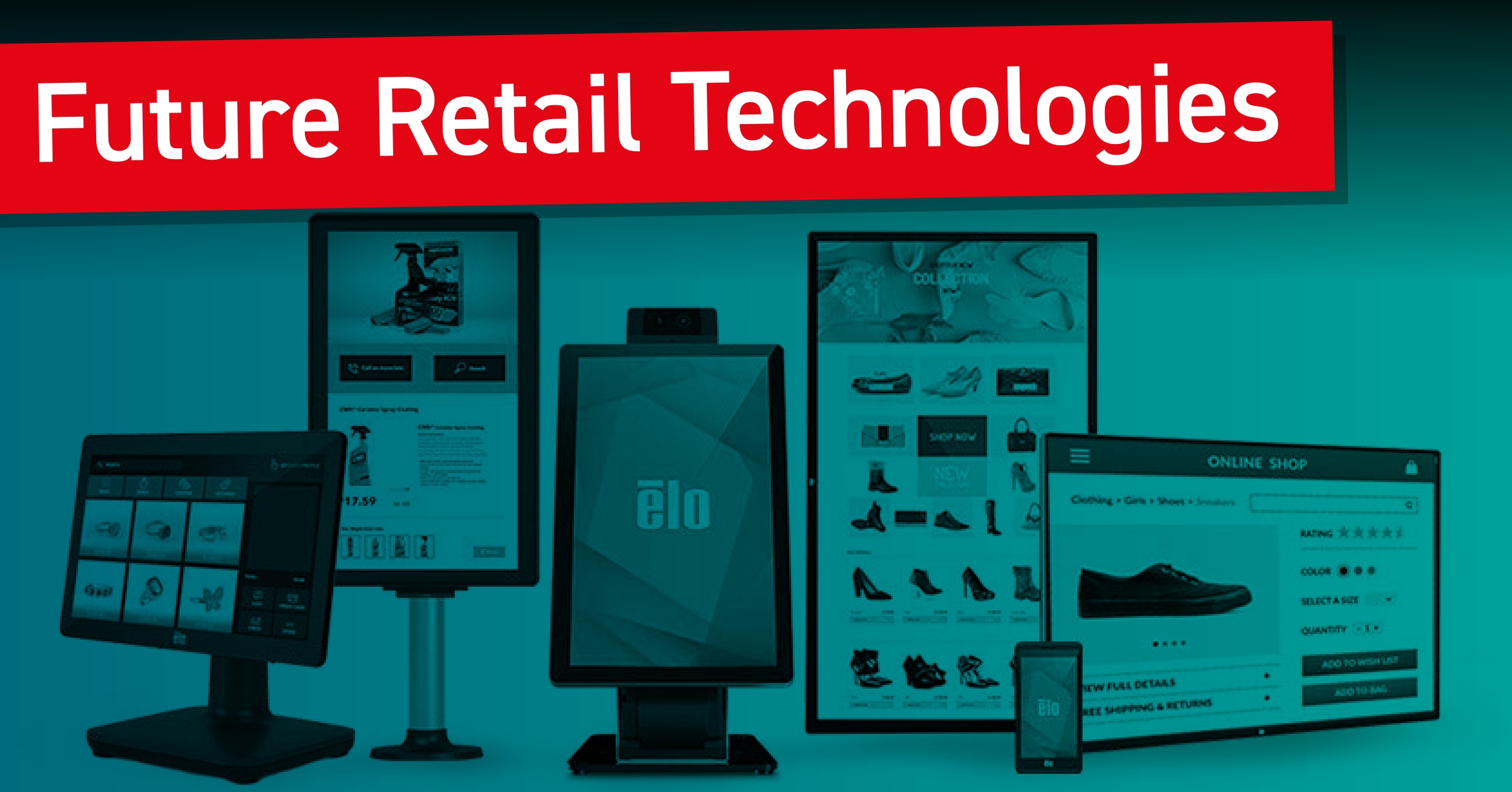 When we look back at how far we’ve come over the last couple of decades in terms of digital technology in retail, we can see how it’s completely reshaped the shopping experience and changed customers’ in-store expectations. So, where do we go from here? Future technology in retail includes the acronyms: VR, AR, AI, IoT - all of which we explore below. Technology in retail to keep on top of future trends is imperative if you want to stay relevant, profitable, and ahead of your competition. You’ll need to boost your in-store experience to meet evolving and increasingly high customer expectations, while potentially changing up your operating model. You’ll also need to have an eye on how tech is affecting jobs. It’s estimated that by 2030, technology in retail will affect a third of all tasks in the UK, so retailers need to be prepared to adapt to and develop the skills needed to perform these tasks.
Retail Technology Trends For 2022 & Beyond
Technology trends in the retail industry are quick to evolve and they will shape the industry for the foreseeable future. In fact, technology in retail has given rise to a very different type of marketing and customer interaction: omnichannel retail. New retail technology trends mean that retailers can interact with customers through more channels than ever before, including:- In-store
- Online
- Catalogues
- Interactive retail displays
- Social media
- Mobile
- Game consoles
- TV, and much more
1. Virtual reality (VR)
Virtual reality in retail stores has the power to transform the physical shopping experience and holds huge potential. Global virtual and augmented reality revenue is expected to reach $80 billion by 2025. While VR is most commonly thought of as something to try in the comfort of your own home, it can actually create a compelling in-store customer experience. VR can positively impact key retail metrics, such as footfall and time spent in-store. The fact that virtual reality is still pretty new tech means that it can encourage customers in-store. When done well, it also increases dwell times and sales. A good example of virtual reality in retail stores comes from Marks & Spencer, who toured UK cities with a pop-up VR showroom. Customers could drag and drop items from the retailer’s premium LOFT homeware collection to create their ideal living space. This type of immersive experience improves engagement and can help boost repeat business, with customers returning in-store for the sheer experience.2. AI in retail technologies
AI in retail encompasses everything from computer vision and real-time, personalised promotions that help you connect and interact with your customers, to machine learning for stock management and autonomous robots that enable you to optimise your operations. While it’s not uncommon these days for retailers to use AI in back-end operations and marketing, it’s currently less common in-store. That’s where huge benefits lie. In-store AI includes:- Digital signage that changes depending on who’s watching
- Sensors that track how customers move around the store so you can make better cross- and up-selling decisions
- Computer vision that provides data from visual images, enhancing customer experience and strengthening stock management
3. Augmented reality (AR) shopping
Like VR, AR may not be a new concept, but it is on the rise due to the 5G rollout and new AR apps, which are helping the tech become more accessible. Customers are also on board, with 71% of shoppers saying they would shop more often if they used AR apps, and conversion rates for AR users increasing by 90% in 2020. Augmented reality shopping can be used in a few different ways:- Help customers navigate their way through your store so they can find what they’re looking for more quickly
- Personalised, virtual product displays - for example, Ikea customers could virtually place furniture in their homes to see how it looked
- Helps buying decisions - customers of beauty brand Sephora use AR to virtually test makeup
4. Autonomous robots for retail
Using autonomous robots in retail is most common on the factory floor. Recently, we have begun to see them in-store where they can free up staff to concentrate on human, personal interactions. In the US, Giant Foods Stores use robots to clean up spills on the shop floor, and Walmart uses autonomous shelf-scanners to check stock. In airports, robots can answer simple questions. But it doesn’t stop there. One of the main advantages of using autonomous robots in retail is that they can combine AI and IoT (Internet of Things) - and they’re mobile. They can analyse product data and customer buying patterns, maintaining on-shelf availability and boosting stock management efficiency. Other types of robots being trialled in retail include drones, ‘exosuits’ for employees to wear so they can lift heavier items, and robots that can charge electric cars while customers shop.5. In-store beacon technology
In-store beacon technology uses Bluetooth devices to send notifications to smartphones based on a customer's location in your store. As long as the customer has your app open on their phone. The types of notifications can include targeted product discounts, exclusive promotions, and reminders. This type of interactive retail tracks customers as they move around your store. It can also be highly engaging and comes with improved conversion rates and an increased likelihood of purchase.6. Virtual fitting rooms
Virtual fitting rooms use augmented reality to help customers decide what to buy by virtually trying clothes or beauty products on without touching them. AR places your chosen item over your live image so you can check the fit, size, colour, style, etc. This technology has become increasingly popular since the pandemic when clothing products saw a decline of over 43% in sales during lockdowns and an understandable hesitancy amongst customers of trying clothes on when retail reopened. But virtual fitting rooms aren’t confined to the digital space. 71% of customers said they would shop in-store more if it offered AR technology. Standing next to a mirror and holding up an item to see how it looks is massively more convenient and quicker than changing in a fitting room - it also makes customers feel safer than being in a high-touch changing room.The Future of Shopping
With retail changing faster than ever, a key consideration is how to future-proof your business. While you can’t know for sure what’s going to happen to the industry over the next five or 10 years, a few possibilities look likely. These are our predictions for the future of shopping in retail:- Sustainability will be crucial - and no greenwashing allowed. Your actions must back up your words
- You’ll be able to update customers on stock in real-time
- The use of devices in-store will increase
- You’ll have to find (and maximise) your niche in the customer journey
Retail Technology Strategy
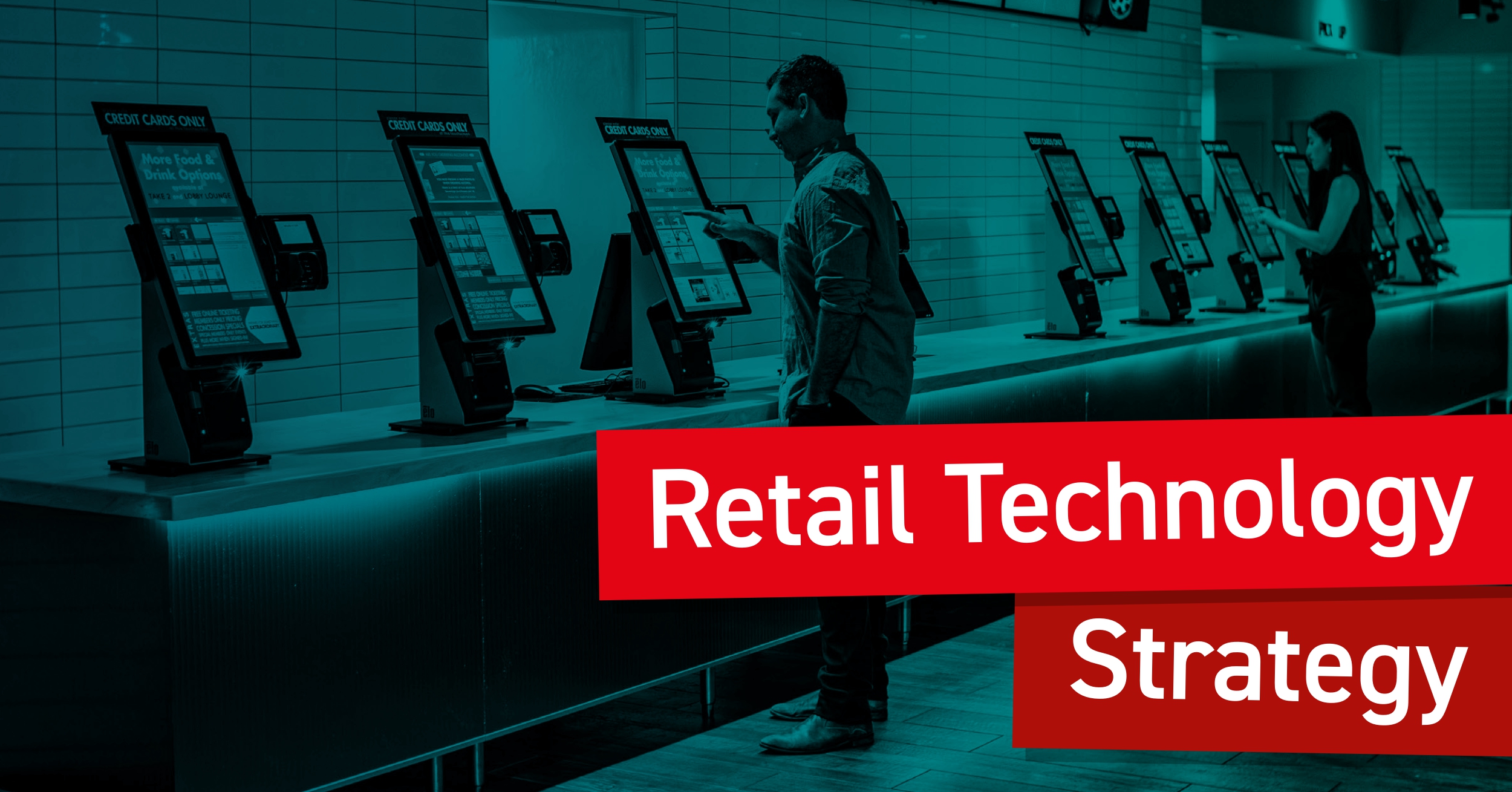 Today’s digital-first world and the fourth industrial revolution combine to put many and often competing pressures on retail technology. These pressures include everything from how to create true in-store engagement and getting POS right, to inventory management accuracy. There’s also a lot of technology used in the retail industry. How do you know what’s going to meet your objectives, drive sales, and boost your bottom line? That’s where your retail technology strategy comes into play. Understanding the landscape is the starting point, but it’s vital to know your customers. Not just their demographics, but their emotional connection with your products, what they might buy, and when. From there, a multi-channel (or preferably omnichannel) approach and a formalised retail technology strategy will help you on many levels. They’ll strengthen the in-store experience, connect with your customers where they are, and drive conversions and revenue.
How retail channels have evolved
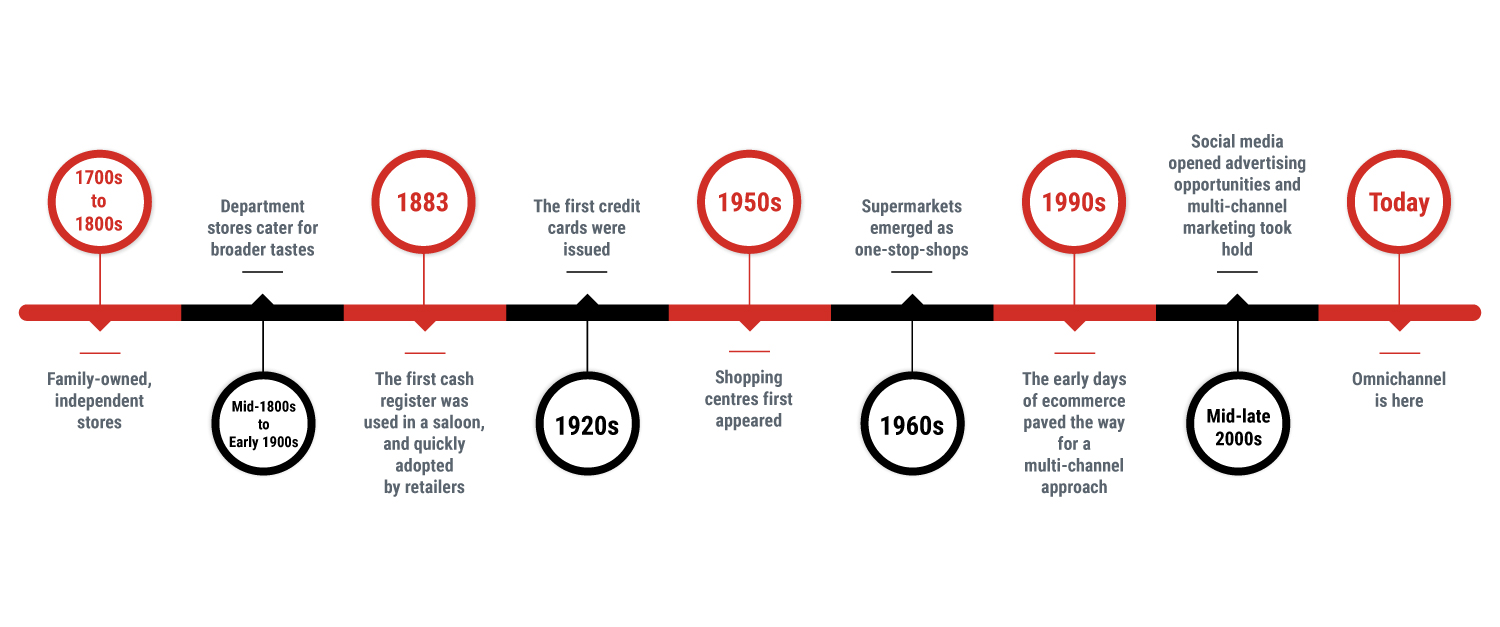
While retail may seem like a slow-moving beast from the outside, anyone in the industry knows how quickly it’s been changing over the last couple of decades. From ‘mom and pop shops’ via the department stores of the mid-1800s and the emergence of shopping centres in the 1950s, to today’s multi-channel physical/digital hybrid space, retail channels continue to evolve in new and exciting ways.Here’s how modern retail channels have evolved:
What is multi-channel retailing?
Multi-channel retailing offers customers a variety of channels to buy from you. Including in-store and also from your website, social media, email, marketplaces, and apps. The advantage of using a multi-channel approach is that you create a cumulative effect, exposing your products to potential customers in different ways and boosting sales by allowing them to buy when, where, and how they want to. You’re basically maximising revenue by offering choice. The multi-channel retailing approach works best when you use a common strategy across all your channels. This cohesion and consistency provide customers with similar interactions, no matter where that interaction takes place, reinforcing your proposition. One major challenge of multi-channel retail is that you need to be able to coordinate stock levels across your sales channels in real-time, which can often be an inefficient and time-consuming manual process. Multi-channel retailing is often mistaken for omnichannel retail, although there’s one distinct difference.What is omnichannel retail?
Omnichannel retail is similar to multi-channel in that it offers customers a choice of platforms to purchase from. In-store, online, social, apps, etc.However, instead of working in silos with the product at the centre, omnichannel marketing connects all possible touchpoints and places the customer at the centre, so they can choose their own seamless experience.
Interactive retail and new technologies such as AI and VR play a huge part in omnichannel retail, which aims to follow customers through whichever channel they happen to choose, ultimately being omnipresent.
Omnichannel retailers offer a flawless customer experience that includes:
- Online, in-store or click and collect purchase options
- A shared shopping basket across all channels
- A cross-channel loyalty programme
- The ability to return products using the channel of their choice
- Pricing consistency
Benefits of the omnichannel approach
Customers today expect a seamless experience, exceptional 24/7 service, and personalised communications, no matter the channel. If retailers and brands don’t deliver on these counts, customers will simply go to the nearest competitor. But it’s not just customers who benefit from this approach. The omnichannel approach provides deep benefits to retailers, including:- Driving traffic, conversions, and sales
- Reaching new customers in different channels
- Optimising efficiency
- Improving stock management
- Fostering customer loyalty and repeat business
- Reducing waste
How to create an omnichannel retail plan
First things first: to build a robust omnichannel retail plan, you must truly understand your customer. Not just who they are or what they do, but what they think and feel, and how they behave (or will behave in the future). To get to this depth of understanding, retailers must know things like:- Which platforms your customers use when they purchase